
Olathe, KS · Garage Door Service
Garage Door Opener Installation Around Olathe
Olathe Garage Door Pros installs new garage door openers across Olathe, KS homes built mostly in the 1960s-70s, matched to your door, budget, and climate.
- Repairs & new doors
- Springs & openers
- Serving 8 nearby communities
How We Fix It
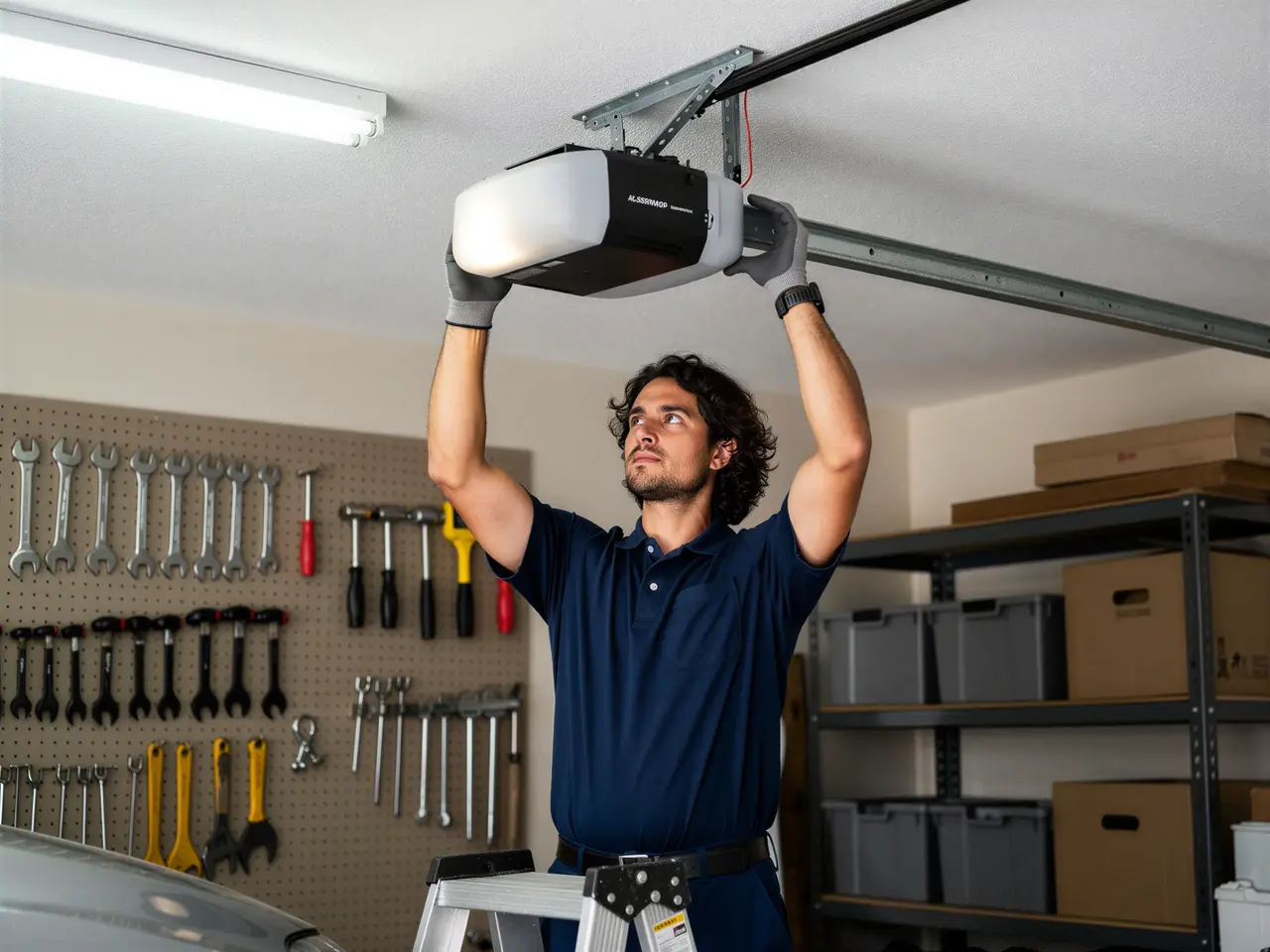
We pull the old opener off the rail, check the header bracket, and look at the door itself before we talk about a replacement unit. A lot of houses in this service area still carry the original header board from when the house was framed between 1950 and 2004 - most of it from the 1960s and 70s - and that board doesn't always take a new mounting bracket without some reinforcement. We size the opener to the door weight, not just whatever is on sale: a heavier insulated double door built for a cold-climate winter needs more lift than a single light door, and running an undersized unit on a heavy door is how you burn out a motor in two years instead of fifteen.
We set the travel limits, program the safety sensors, and test the force settings so the door reverses before it crushes something. If your opener uses a chain drive on an older rail and you want quieter belt drive, we swap the rail assembly too, not just the head unit. Once it's running we walk you through the remote, the keypad if you want one, and the manual release, because most service calls six months later are people who never got shown how to disconnect the opener by hand.
What You Are Seeing
The usual signs: the door starts to open and stalls, the opener motor hums but the door doesn't move, or the light flashes without the door doing anything at all. Sometimes it's just noise - a worn gear inside the opener head grinding before it quits for good. Other times the door reverses right after it touches the floor, which almost always means the close-force setting or the limit switch is off, not that the opener is dying.
In older houses around here running original hardware, we also see openers that were sized for a lighter door decades ago now straining against a heavier replacement door installed at some point since - the motor works harder than it should on every cycle, and that shortens its life fast. None of these symptoms mean you need a new door. They mean the opener and the door stopped being matched to each other.
What Causes It Around Here
Housing in this service area runs from 1950 through 2004, with median construction around 1977, and most of the stock across the nineteen areas we work falls into that 1960s-70s band. Openers from that era, if they're even original, were built for lighter doors and simpler lift needs than what people run today. When a homeowner upgrades to a heavier insulated door but keeps the old opener, or replaces the opener but keeps a decades-old rail and header setup, the mismatch shows up as strain, noise, or a door that won't fully close.
The cold-moderate climate band this region sits in matters too. Winter temperature swings stiffen door grease and tighten metal tolerances in the rail and gears, which is harder on an opener that's already working past its rated lift. We see failure calls cluster in the cold months for exactly that reason - not because anything broke overnight, but because a borderline opener finally gets pushed past what it can do.
Can You Do This Yourself
Mounting a new opener head to an existing rail and running the wiring is doable for someone comfortable with a drill and a level, and plenty of homeowners do it. Where people get into trouble is the header bracket on an older house - if that board has any rot or was never rated for the pull of a modern opener, bolting a new unit to it is a problem waiting to happen, and you can't always see the issue from underneath.
Setting the safety reversal force correctly also isn't optional. An opener that doesn't reverse properly on contact is a real hazard, not a minor adjustment to get to later. If you're swapping a like-for-like opener on solid, newer framing, a careful DIY install is reasonable. If your house falls into that older 1960s-70s stock, or you're not sure what's behind the header board, that's the point where it's worth having someone look at the structure first, even if you do the rest yourself.
Frequently asked questions
How do I know if my garage door opener is too small for my door?
If the motor strains, hums without moving the door, or the door opens slower than it used to, the opener may be undersized for the door weight. This shows up often when a heavier insulated door replaced a lighter original door but the opener stayed the same. We check lift capacity against door weight before recommending a unit.
Will a new opener work with my old garage door rail and header?
Sometimes, but not always. Houses built in the 1960s and 70s - common across this area - often have header boards that weren't framed for a modern opener's pull. We check the header and rail condition before mounting anything, and reinforce or replace them if needed rather than bolting a new unit to a weak point.
Does cold weather affect garage door openers here?
Yes. This area sits in a cold-moderate climate band, and winter temperature swings stiffen grease and tighten gear tolerances. An opener already running near its rated lift limit tends to fail in the cold months first, which is why we see more opener calls in winter than in the warmer stretches of the year.
Can I install a garage door opener myself?
You can if you're comfortable with basic tools and your header framing is solid. The risk is mounting a new opener to an older header board that isn't rated for it, or setting the safety reversal force incorrectly. On older framing we'd rather check the structure first, even if you handle the rest of the install.
Related services
By Neighborhood
Opener Installation across the Olathe area
We also handle opener installation in these Olathe-area suburbs.
Book garage door service in Olathe
Call now or request a quote - tell us what the door is doing and where you are.