
Olathe, KS · Garage Door Service
Older Olathe Doors Weren't Built the Way New Ones Are
Olathe homes built mostly between 1960 and 1977 often still run original steel doors with no foam core. Here's what that means for maintenance and when to call it quits.
- Repairs & new doors
- Springs & openers
- Serving 8 nearby communities
What to Check
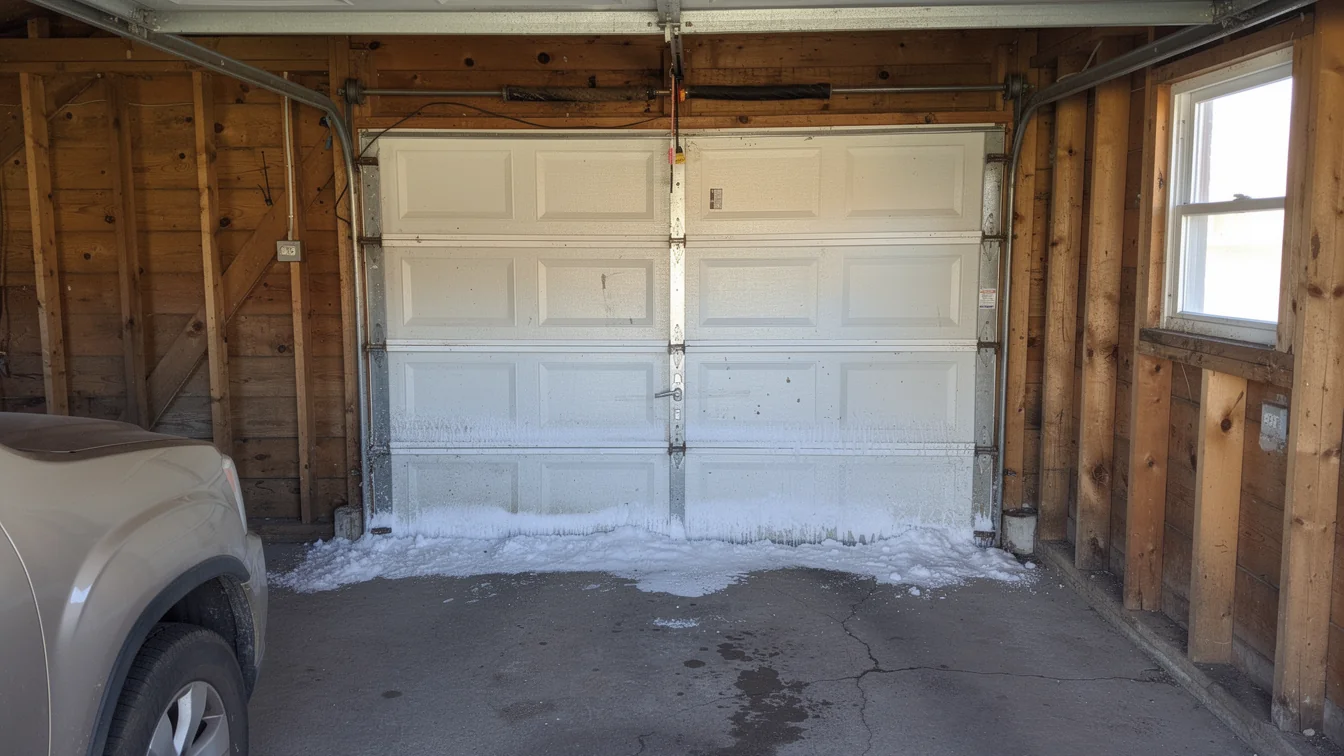
Start by looking at the door skin itself. If your house went up anywhere near the median build year for this area, 1977, there's a decent chance the door is a single layer of steel with nothing behind it - no foam, no vinyl backing, nothing stopping heat transfer through the panel. Run a hand across the inside face on a cold morning. If it's as cold as the outside air, that's your answer.
Next check the bottom seal and the weatherstrip around the frame. Doors from the 1960s-70s era that make up most of the stock in this part of town were built before anyone worried much about air sealing a garage. Rubber there has usually been replaced at least once, but check for cracking anyway.
Look at the hinges and rollers for pitting or rust streaks, and check whether the torsion spring has visible rust on the coils rather than just surface dust. A door installed when the house was built, or close to it, is now decades past its spring's rated cycle count even if nobody's ever had it serviced. None of this tells you the door is broken. It tells you what you're working with before you decide whether to patch it or replace it.
The Situation
Housing in this area was mostly built between 1950 and 2004, with the bulk of it dating to the 1960s and 70s across the nineteen named neighborhoods that make up the broader service area. That matters for garage doors more than people expect, because insulation requirements for residential doors weren't standard practice when most of these houses were framed. A door that's original, or even a straight like-for-like replacement from twenty years ago, is likely a non-insulated steel panel riding on hardware sized for a lighter build.
With 38,491 owner-occupied houses across the area and a median household income just under $91,000, most of what we see is the same pattern: a serviceable but dated door that's never been upgraded because it still opens and closes. That's a reasonable call for a lot of homeowners. It's a different call once the garage shares a wall with living space, or once heating bills start showing it.
What the Weather Here Does to It
This area sits in a cold-moderate climate band, which means real freeze-thaw cycling every winter rather than one or two cold snaps. Steel contracts in the cold, and on an older door without insulation that contraction happens fast and uneven across the panel, which is part of why you'll see more warping and seam gaps on uninsulated doors than insulated ones after a few winters.
Cold also changes spring tension. A torsion spring calibrated for a door's weight at 70 degrees pulls differently at 20 degrees, and on a spring that's already old, that swing is enough to tip a marginal spring into a snapped one. We see more spring failures in the first hard cold stretch of the year than at any other time, and on houses with original or decades-old springs, that's not a coincidence.
Track alignment drifts too. Cold concrete shifts slightly, door frames settle, and a track that was fine in August can bind in January. None of this is dramatic. It's slow wear that cold weather speeds up on hardware that was never built with a foam core to buffer the swing.
When It Stops Being a DIY Job
Checking the door skin, the seals, and the hardware for rust is something any homeowner can do with a flashlight and ten minutes. Replacing a torsion spring is not. These springs are under enough tension to cause serious injury, and on a door old enough to have a non-insulated panel, the spring is also old enough that nobody can tell you its exact remaining cycle count. That's not a job to learn on your own garage.
The other line is cost versus replacement. If a door built before insulation rules is also showing warped panels, rusted-through bottom sections, or hardware that's been patched more than once, putting more money into it stops making sense. A full replacement with an insulated door costs more up front, but you're not fighting the same cold-weather spring swings and panel warping every winter after that. We'll tell you straight when a repair isn't worth it rather than patch something that's going to fail again in a year. We don't carry every part for every decade of door on the shelf, either, so some older hardware means a short wait on order.
Frequently asked questions
How do I know if my garage door is insulated?
Touch the inside panel on a cold day. If it feels as cold as the outside air, there's no foam core behind it. Many houses in this area were built before insulated doors were standard, so an original or older replacement door is often a single steel layer with nothing behind it.
Why does my spring keep breaking in winter?
Cold changes how much tension a torsion spring needs to lift the same door. An older spring that's already near the end of its life is more likely to snap when temperatures drop hard, which is why we see more spring calls here in the first cold stretch of the year than any other time.
Is it worth replacing an old door instead of repairing it?
Depends on the door. If the panel is warped or rusted through and the hardware's been patched more than once, repair costs start to rival replacement. An insulated replacement also holds up better through freeze-thaw cycling than an older uninsulated steel door.
Related garage door services in Olathe
More garage door guides
Book garage door service in Olathe
Call now or request a quote - tell us what the door is doing and where you are.