
Olathe, KS · Garage Door Service
Garage Door Maintenance Across the Olathe Area
Garage door maintenance around Olathe for homes built 1950-2004, where cold winters and original hardware wear springs, rollers, and seals faster than owners expect.
- Repairs & new doors
- Springs & openers
- Serving 8 nearby communities
How We Fix It
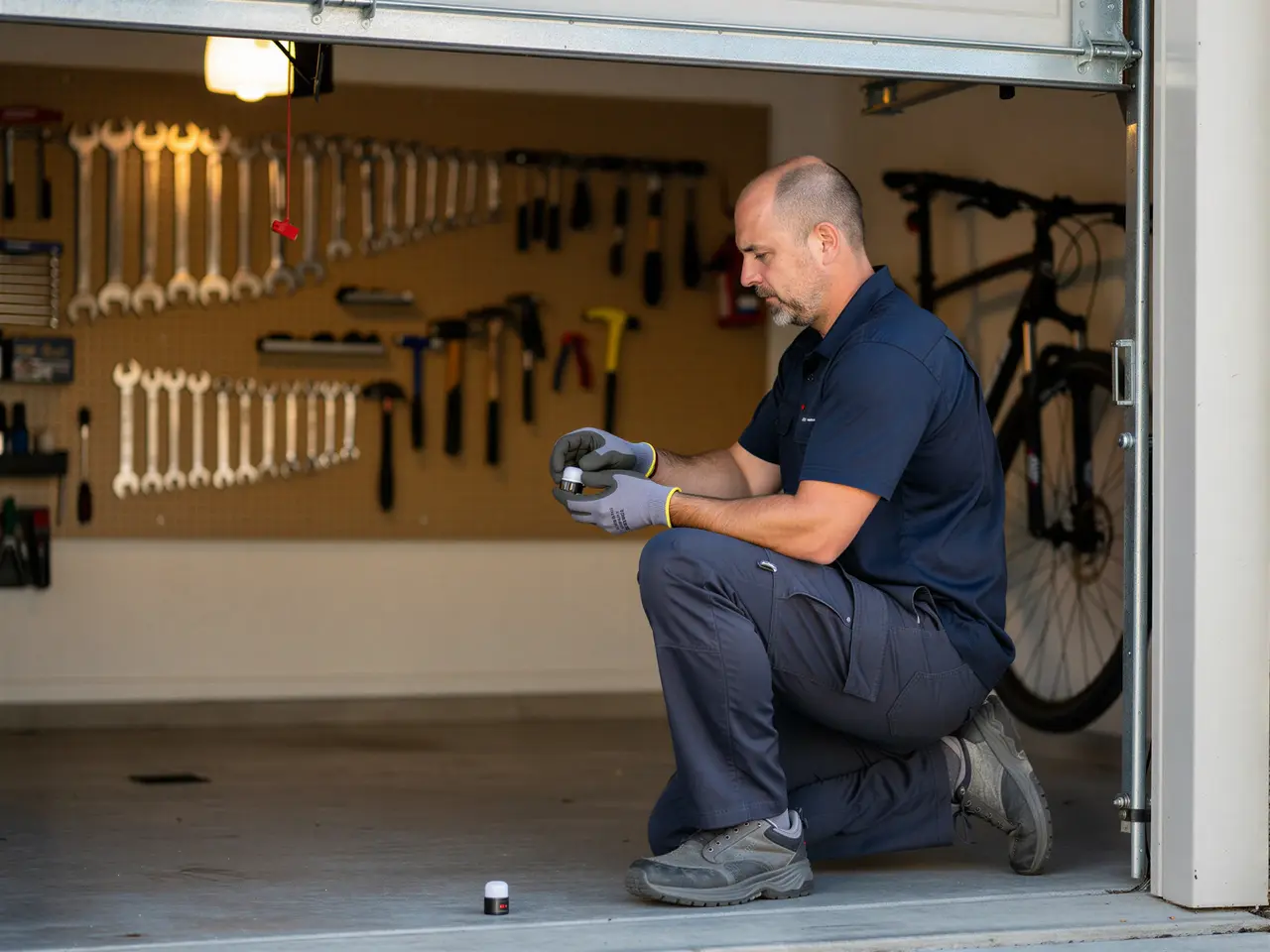
A maintenance visit on a house in this service area isn't a quick squirt of oil and a wave goodbye. We start at the track, checking it for the kind of flare and misalignment you get after decades of seasonal ground shift, then move to the rollers and hinges, which on a lot of the 1960s and '70s builds common across these 19 named areas are still the original steel rollers nobody makes quite the same way anymore. We check spring tension by hand, not by guess, because a torsion spring that's lost even a quarter turn of tension changes how hard the opener has to work every single cycle. Cables get a visual for fraying at the drum. Weatherstripping gets checked for the kind of hardening that cold-climate rubber does after enough winters. The opener gets a force-and-travel check, because an opener compensating for a stiff spring or a dragging roller burns out its gears years early. We lubricate with a lithium-based grease rated for cold, not the household oil that gums up and attracts grit. Last step is the balance test: door lifted by hand to waist height, released, and it should hold. If it drops or rises on its own, that's a spring or cable job, not a maintenance line item, and we'll tell you so before we touch anything else.
What You Are Seeing
Most calls start the same way: the door is noisier than it used to be, or it hesitates partway up, or the opener strains in a way it didn't a year ago. Some owners notice the door sagging slightly on one side when it's down, or a gap under one corner that wasn't there before. Others just notice a grinding or popping sound off the torsion spring as the cold sets in. None of this is dramatic yet. It's wear showing up in slow motion, which is exactly the point of catching it on a maintenance visit instead of waiting for the door to stop working on a Tuesday morning when someone needs to leave for work. Across the roughly 38,491 owner-occupied houses in this service area, the pattern is consistent enough that we see it door after door: hardware that was fine for twenty years starts needing attention all at once, usually in the same few-year window, because it all went in around the same time.
What Causes It Around Here
Housing in this service area runs from 1950 through 2004, with the bulk of it going up in the 1960s and '70s. That means a lot of original torsion hardware, original track, and in some cases original openers that have been running on the same springs for forty or fifty years of cold-climate cycling. This area sits in a moderate-cold climate band, which matters more than people think for a garage door: steel contracts in winter, lubricant thickens or washes out, and rubber seals that were flexible in August turn stiff and crack by February. A door that's never serviced doesn't fail gracefully in that kind of swing - it fails at the worst moment, usually a cold morning when the spring is already under more strain than it would be in summer. Add in that a lot of these houses still carry their original rollers and cable sets, never upgraded, and you get a predictable rhythm: hardware installed in the same building boom wearing out in the same stretch of years, all across the same streets.
Can You Do This Yourself
Some of it, yes. You can visually check your weatherstripping for cracking, listen for new grinding sounds, and keep the track free of dust and debris with a damp rag. You can watch for a door that doesn't stay level as it closes. What you should not do is touch the torsion spring. It's under enough stored tension to cause a serious injury if it lets go while you're adjusting it, and that's true whether the door is five years old or fifty. We also won't pretend every door is worth servicing rather than replacing - if the track is bent beyond straightening or the panels are rusted through, a maintenance visit is money spent delaying a decision you'll make anyway. Our honest limit: we don't stock every obsolete roller or hinge style used on the oldest doors in this area, and on some of those jobs there's a lead time while we source the right part instead of forcing a mismatch onto the hardware.
Frequently asked questions
How often should I get my garage door serviced in Olathe?
Once a year is the standard most owners settle on, timed before winter if you can manage it. Houses here built in the 1960s and '70s with original hardware sometimes do better on a six-month schedule, especially if the opener has started sounding strained or the door has gone a few years without attention.
Is maintenance worth it on an older door?
Usually, yes, as long as the track and panels are structurally sound. A lot of what wears out - lubrication, roller wear, spring tension, weatherstripping - is cheap to address early and expensive to ignore. If the frame itself is bent or rusted through, that's a replacement conversation, not a maintenance one.
Can cold weather really affect my garage door that much?
Yes. In this moderate-cold climate band, steel hardware contracts, old grease thickens or washes out, and rubber seals that were fine in summer crack by midwinter. A door that was never serviced tends to show its wear all at once on the first hard cold snap rather than gradually.
Do you work outside Olathe proper?
We cover the wider service area, including towns like Gardner, Spring Hill, and De Soto. The maintenance approach is the same everywhere - it's the local housing age and layout on each town's own page that differs.
Related services
By Neighborhood
Maintenance across the Olathe area
We also handle maintenance in these Olathe-area suburbs.
Book garage door service in Olathe
Call now or request a quote - tell us what the door is doing and where you are.