
Olathe, KS · Garage Door Service
What That Sound From Your Garage Door Is Actually Telling You
A grinding opener or a loud bang in your Olathe garage isn't random. Here's what each sound means for houses built here between 1950 and 2004.
- Repairs & new doors
- Springs & openers
- Serving 8 nearby communities
What to Check
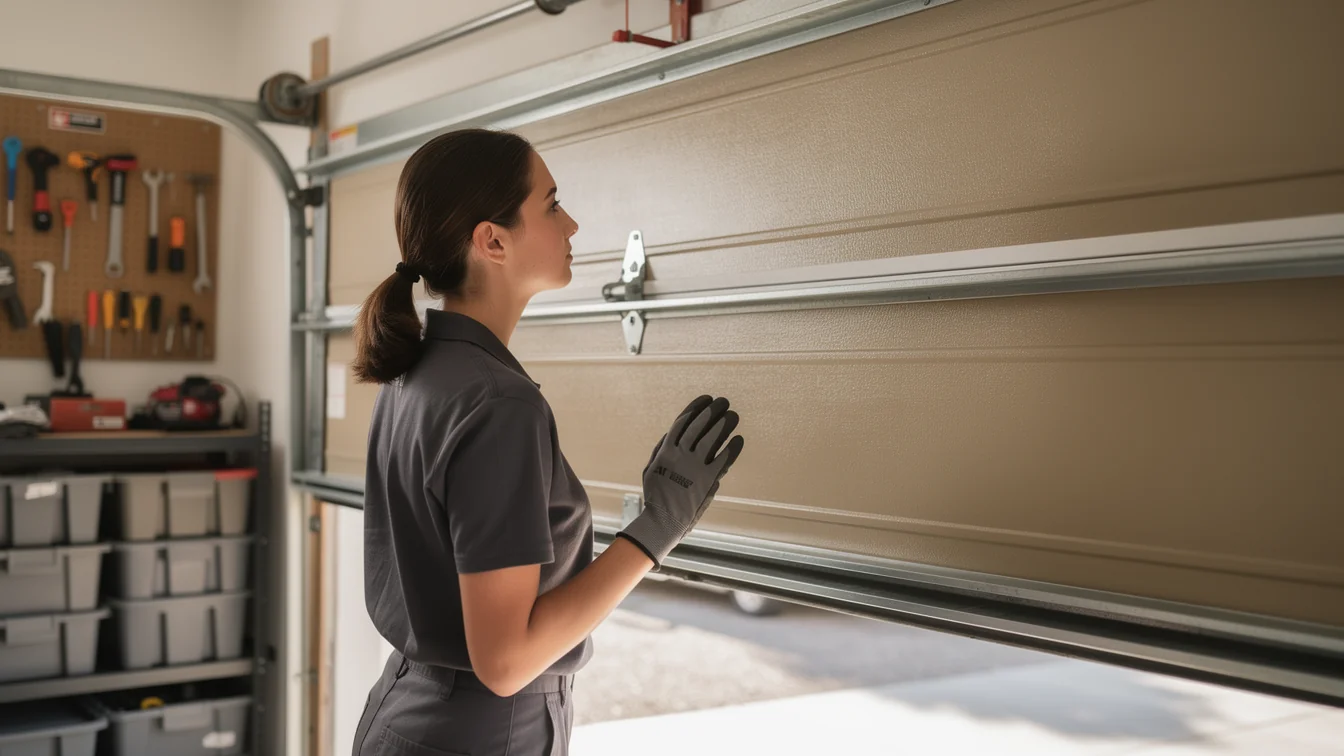
Start with your ears before you start with a wrench. A rhythmic thunk once per rotation usually means a flat spot on a roller or a bent track bracket. A sharp metallic bang, especially right after the door closes, is almost always a torsion spring losing tension or snapping outright. Grinding during travel points to a worn opener gear, and a door that's gotten noticeably heavier to lift by hand is telling you the spring is already weak even if it hasn't broken yet.
In Olathe, with 38,491 owner-occupied houses across the service area and housing stock running from 1950 up through 2004, the age and type of your hardware matters as much as the sound itself. A house built in the 1960s or 70s, which is the bulk of the stock in the named areas around here, is more likely running original or first-replacement torsion hardware than a house finished closer to 2000. Check the spring type, the track alignment, and whether the noise happens on the way up, the way down, or both. That narrows the diagnosis before anyone touches a tool.
We won't pretend every noise needs a service call. Some are a $12 roller swap you can do yourself on a Saturday.
The Situation
Olathe's housing runs a wide span, built mostly between 1950 and 2004 with a median year around 1977, and that median matters more than the average homeowner realizes. A door installed when a house was built in the late 1970s is now pushing fifty years old if it was never replaced, and most garage door hardware from that era wasn't built to last that long. Springs rated for 10,000 cycles get there faster than people expect when a door is used twice a day.
Across the 19 named areas that make up this stock, the pattern repeats: 1960s and 70s construction with later additions and remodels scattered in. That means two houses on the same street can have completely different garage door ages and setups, even though they look the same from the curb. One may still have the original extension springs mounted over the track, the other a torsion upgrade from a remodel in the 90s or 2000s. The noise your door makes is partly a function of which era it's actually from, not just how old the house is.
What the Weather Here Does to It
This area sits in a cold moderate climate band, which means the garage door hardware goes through a real freeze-thaw cycle every winter, not just the odd cold snap. Steel springs contract in cold temperatures and lose a measurable amount of lifting force right when the door is heaviest to move. That's when a marginal spring that's been groaning quietly for months finally lets go, usually on the coldest morning of the stretch, not the warmest.
Tracks and hinges see the same swing. Lubricant that was fine in August gets stiff in January, and a door that ran quiet all summer starts squealing or hesitating as soon as temperatures drop. If your door has gotten noisier specifically since the weather turned, that's not a coincidence, that's the cold doing exactly what cold does to steel hardware in this kind of climate. It's a good reason to listen for changes seasonally instead of only when something finally fails.
When It Stops Being a DIY Job
A squeaky hinge or a roller that needs replacing is a fair weekend project. A snapped torsion spring, a cable that's jumped its drum, or a door that's come off track is not - those carry enough stored tension to cause real injury, and that's true whether your house was built in 1955 or 2004. If the door won't move at all, or moves unevenly on one side, stop trying to force it.
Given that median household income here runs $90,982 across 65,120 households, most homeowners in this area are weighing a repair call against the cost of just replacing an aging door outright, and that's a reasonable question to ask rather than assume. A door original to a house built in the 1960s or 70s, especially one still running factory hardware, is often past the point where a spring swap is the economical fix. We'll tell you straight when that's the case instead of running up a bill on a door that's better off replaced.
We serve homeowners in and around Gardner, Spring Hill, De Soto, and the other communities within roughly 20 miles of Olathe. Get in touch if the noise has moved past something you want to chase down yourself.
Frequently asked questions
My garage door bangs loudly once, right when it closes. What is that?
That's almost always a torsion spring reaching the end of its life or already cracked, not the door itself. Don't run the opener again until someone checks the spring - a fully snapped spring under tension is dangerous to handle without the right bars and clamps.
Does the cold actually affect my garage door, or is that a myth?
It's real in this climate band. Steel springs lose lifting force as temperatures drop, and lubricant stiffens in the cold, so doors that ran quiet all summer often start squeaking or struggling once winter sets in. If your door got noisier specifically after a cold snap, the cold is the cause.
My house was built in the 1970s. Is my garage door original?
It's possible, especially since a lot of the housing stock in this area dates to the 1960s and 70s. Original hardware from that era is well past its typical service life, so if you've never had the springs or opener replaced, that's worth checking regardless of what noise it's currently making.
Related garage door services in Olathe
More garage door guides
Book garage door service in Olathe
Call now or request a quote - tell us what the door is doing and where you are.