
Olathe, KS · Garage Door Service
Garage Door Service for Mission Hills' 1953-Era Homes
Mission Hills homes date to 1953, decades older than the area median. See what that means for torsion springs, openers, and custom panel doors here.
- Repairs & new doors
- Springs & openers
- Serving 8 nearby communities
The Complications
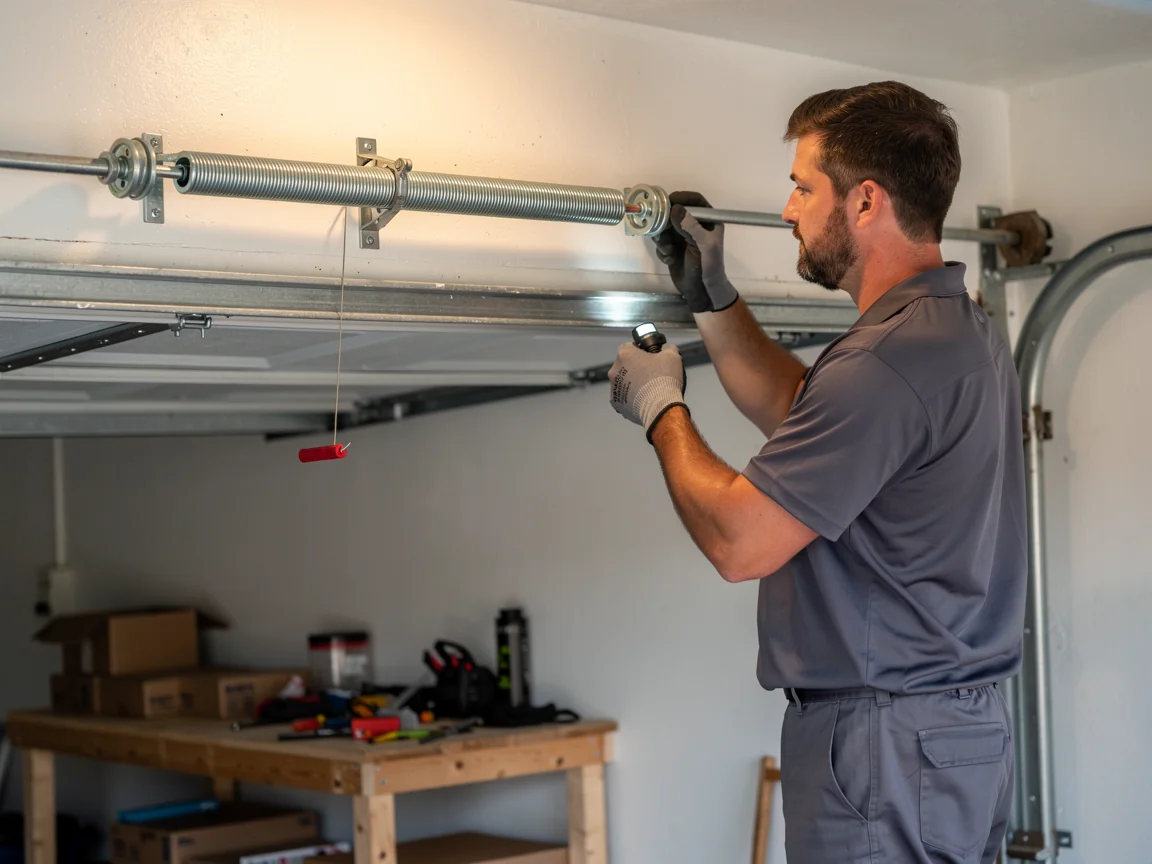
The fault we see most in Mission Hills isn't a worn-out opener remote or a dead keypad. It's a torsion spring or a track bracket that was sized for a door nobody makes anymore. Most houses here went up in 1953, two decades before the median year of 1977 across the rest of the service area we cover from Olathe. That gap matters: a door built for a 1953 opening, especially if it's been swapped once already for a heavier insulated or custom wood panel, often ends up running on hardware that was never matched to the new weight.
We also see mismatches from remodels. A homeowner upgrades to a heavier door for curb appeal or insulation but keeps the original torsion spring and track, because nobody told them the spring sizing has to change with the door weight. The door looks fine standing still. It's the cycle count and the strain on the spring that tell the real story, and that's usually what brings on the call - a spring that let go well before it should have, or a track pulling loose from brackets installed for a lighter door seventy years ago.
What Causes It Around Here
Two things compound the age problem: the cold winters that come with this climate band, and the distance between most Mission Hills doors and new parts. Cold makes steel springs more brittle and openers work harder to lift doors that have picked up moisture or slight warping over the decades. On a door that's already running original or early-replacement hardware from the 1950s-70s building stock typical of this part of the service area, winter cold is often the thing that finishes off a spring that was already near its cycle limit.
The other factor is less about weather and more about planning. We're 14 miles out from our Olathe shop, and Mission Hills' median household income runs near $250,001 - well above the roughly $90,982 average across the rest of the service area - which means more custom and higher-end doors here, not standard stock sizes. When we get a call, we try to figure out what we're dealing with before we load the truck, because driving 14 miles to find out we need a part we didn't bring costs everyone the afternoon.
Can You Do This Yourself
Lubricating hinges and rollers, checking that the auto-reverse safety sensors aren't knocked out of alignment, tightening loose bolts on the track - all of that is reasonable for a homeowner to handle. Torsion spring replacement is not. The spring is under enough stored tension to cause a serious injury if it releases wrong, and on a heavier custom or insulated panel door, which is common on the higher end of what we see in Mission Hills, the spring size and wind count have to match the door weight exactly or you're back to the same failure within a year.
Here's the honest limit: if your door is original to a 1953-era house and has a wood panel or a custom overlay, we often can't just grab a universal part off the truck. Some of those parts take time to source, and we'll tell you that up front rather than promise a same-day fix we can't deliver from 14 miles away. If the door's structure itself is failing - rot, warped panels, a frame that's shifted - replacement usually beats another repair.
What You Are Seeing
A door that slams the last foot instead of settling is almost always a spring that's lost tension, not an opener problem. If one side of the door looks lower than the other when it's open, a cable has likely slipped off the drum or started to fray - common on original 1950s-era track hardware that's seen seven decades of cycles. A door that reverses right after it touches the floor usually means the opener's travel limit needs resetting, not that something is broken.
Grinding or popping when the door moves points to a roller that's worn flat or a track bracket pulled loose, the kind of thing that shows up more on heavier replacement doors sitting on hardware never upgraded to match. If the opener runs but the door doesn't move at all, check first whether the manual release cord was pulled - it happens more often than people admit. For a closer look at what we check and fix for doors in this neighborhood, see our Mission Hills garage door repair page, or visit our main service page for the full rundown of what we handle out of Olathe.
Frequently asked questions
Why does my garage door feel heavier to lift than it used to?
Usually it's the torsion spring losing tension over years of cycles, which is common on original hardware from the 1950s housing stock typical of Mission Hills. The spring does most of the lifting work, and as it weakens, the opener or your arm has to make up the difference. It's worth checking before the spring fails outright.
Do you keep parts in stock for older, custom doors?
Not always on the truck. Mission Hills has a higher share of custom and insulated panel doors than much of the rest of the service area, and some hardware for those doors has to be sourced rather than pulled off the shelf. We'll tell you up front if a part needs ordering rather than promise a same-visit fix we can't deliver.
Is it normal for one side of my door to hang lower?
No. That's typically a cable that's slipped off the drum or started to fray, which shows up more on original track hardware that's been in place since the 1950s-70s. Don't try to force the door up and down on an uneven cable - it puts extra strain on the opener and the remaining cable.
How far out is Mission Hills from your shop?
We travel from Olathe, about 14 miles away. We don't keep a branch or depot in Mission Hills, so when we know ahead of time what kind of door and hardware we're dealing with, we can load the right parts before heading out.
More garage door services in Mission Hills
Book garage door service in Olathe
Call now or request a quote - tell us what the door is doing and where you are.