
Olathe, KS · Garage Door Service
Garage Door Repair for Leawood Homes
Garage door repair for Leawood homes built mostly around 1989, serviced by the Olathe truck 11 miles out. Spring, opener, and track work for this era of house.
- Repairs & new doors
- Springs & openers
- Serving 8 nearby communities
The Complications
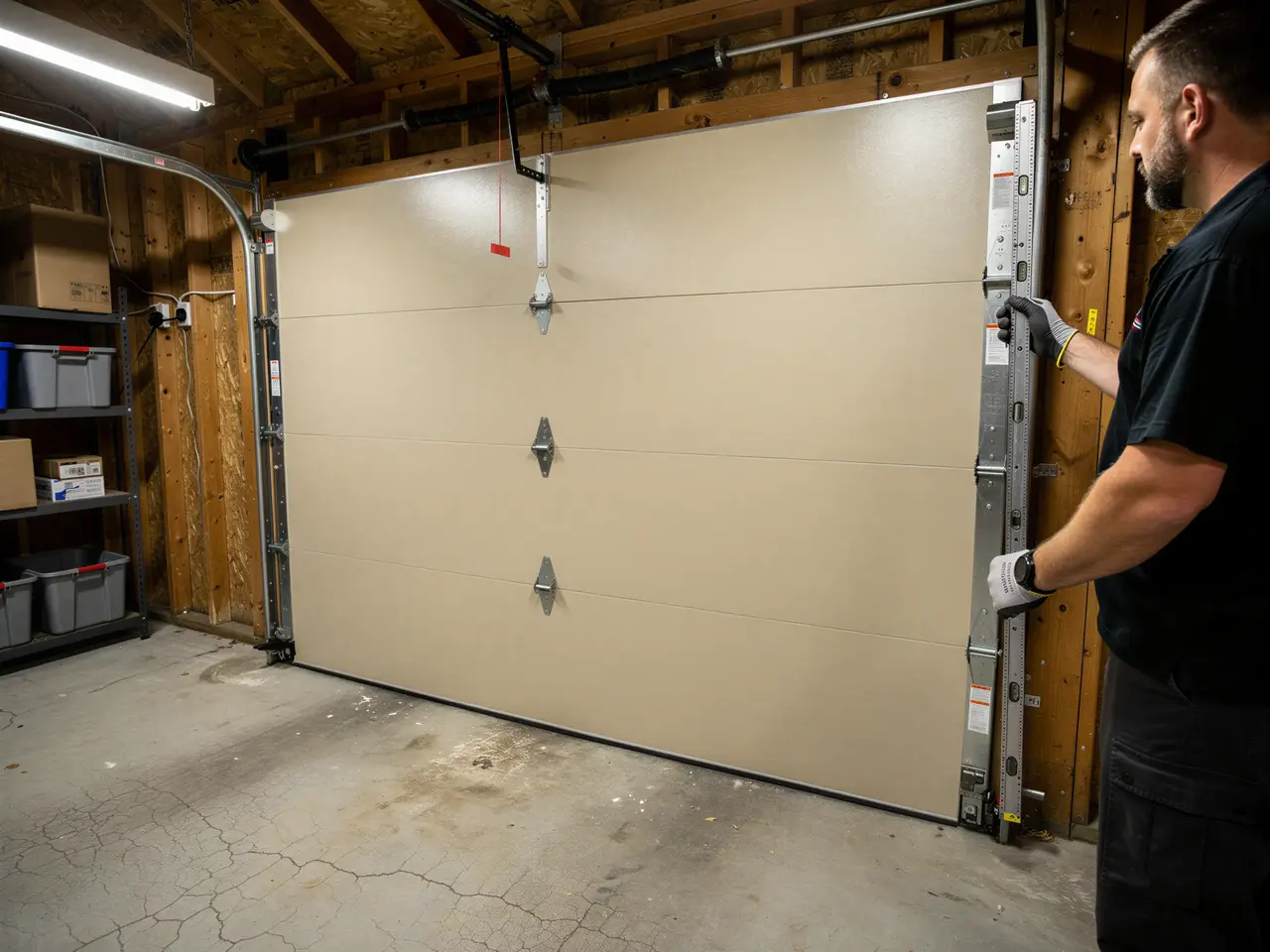
We run this job out of Olathe, and Leawood sits about 11 miles out, which matters less for how fast we can get there than for what we find when we do. Most houses in Leawood went up around 1989, a good decade past the median build year for the rest of our territory, which runs 1950 through 2004 with a lot of 1960s and 70s stock mixed in. That gap shows up on the door itself. A 1989 opener predates the 1993 federal rule requiring photo-eye reversal sensors, so some of the original units we find bolted to the ceiling here still don't have them - not broken, just built before the rule existed, and worth replacing on that basis alone. Springs from that era are often sized for a lighter uninsulated door, and if an owner swapped in a heavier insulated panel since, the original torsion spring is working harder than it was built for. Add the climate band here, cold and moderate, and steel fatigues a little faster on the cold mornings that are common through the season. None of this is exotic. It's just a specific decade of hardware, and the fix starts with knowing which decade you're looking at before you touch a bolt.
How Long You Are Without the Door
There's no depot in Leawood - the truck comes from Olathe, and that 11-mile drive is part of the honest math on timing, not something we paper over. A spring job or opener swap on a door from this era usually doesn't run long once the truck is on site, but the trip itself is built into the day's route, same as any call this far out. If a part isn't something we carry as standard stock - an odd-length track section or a control board for an opener that's been discontinued - that adds a wait, and we'll tell you that up front rather than guess. Houses in this part of the territory tend to be fairly uniform in age, which actually helps: once we've worked one door from around 1989, we've got a good read on what's likely behind the next ten. That consistency is one of the few advantages of a suburb built in a tighter window instead of the patchwork of eras you get closer to the center of the service area.
What Is on the Truck
For a door built around the time Leawood's housing stock went in, the usual carry is steel sectional panels, torsion springs sized for a standard insulated double door, and opener parts that cover the chain-drive half-horsepower units that were common through the late 80s and into the 90s - a lot of which are still running, just tired. We carry photo-eye sensor kits specifically because so many openers from before 1993 never had them installed at the factory, and it's a cheap upgrade worth doing anytime we're already up on a ladder for something else. Extension springs show up less often here than torsion, but we carry both. What we don't always have on the truck is a replacement panel to match an original color or a discontinued paint run - if a single panel's been dented and the rest of the door has faded over three decades, color-matching one panel usually isn't realistic, and we'll say so instead of pretending otherwise.
Can You Do This Yourself
A torsion spring holds real tension no matter what decade the door was built, and winding or unwinding one without the right bars is how people lose fingers - that part doesn't change by town. What's worth doing yourself on a door from around 1989: tightening loose hinge bolts, lubricating rollers and the track, and testing the auto-reverse by laying a 2x4 flat under the door to see if it kicks back. If it doesn't reverse, that's not a DIY fix - it means the sensors are misaligned, missing, or wired wrong, and that's a safety issue first and a convenience issue second. Given the income levels common in Leawood, we also get more calls here asking about full replacement instead of repair, which is a fair question to ask yourself too: a door pushing 35 years old with an opener from the same era is often better replaced outright than patched one part at a time, and we'll tell you honestly when that's the better math.
Frequently asked questions
Why does Leawood get a separate page instead of just the main Olathe page?
Because the housing here is a different generation than most of the service area - built mostly around 1989 rather than the older 1950s-70s stock common elsewhere - and that changes what doors, springs, and openers we're actually working on when we get the call.
How far is the drive from your shop to Leawood?
About 11 miles. We don't keep a separate depot in Leawood; the truck comes out of Olathe for every call here, and that distance is part of how we route the day.
My opener doesn't have the little sensor eyes near the floor. Is that normal?
It can be, if the opener dates to before 1993, which is possible on a house built around 1989 with its original unit still installed. Sensors became federally required after that. It's not a defect, but it is worth upgrading for safety.
Is it ever better to replace the whole door instead of repairing it?
Often, yes, on a door approaching three decades old with an opener from the same era - we see that question more in Leawood than in older parts of the territory. We'll look at the specific door and tell you honestly whether a repair is worth doing or whether replacement makes more sense.
Book garage door service in Olathe
Call now or request a quote - tell us what the door is doing and where you are.