
Olathe, KS · Garage Door Service
Garage Door Repair for Gardner Homes
Gardner's housing is newer than most of the Olathe service area, which changes what breaks on the door. We cover Gardner from Olathe, 8 miles out.
- Repairs & new doors
- Springs & openers
- Serving 8 nearby communities
The Complications
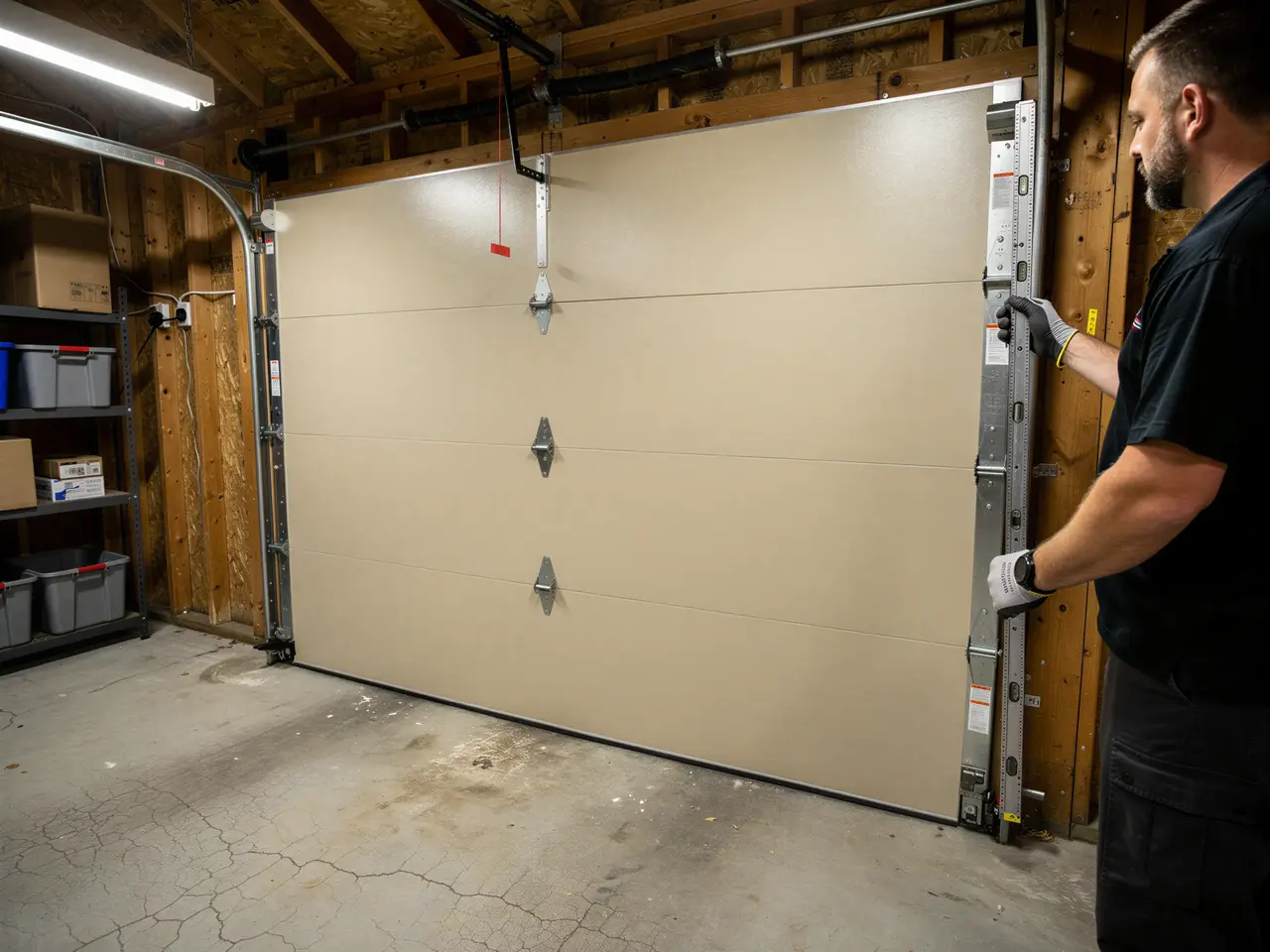
Gardner is a smaller piece of the territory we cover out of Olathe - about 8,175 households, compact enough that most of the repair calls here cluster around a handful of builder patterns instead of the wide mix you'd see in a bigger suburb. That matters for the diagnosis. Across the broader service area the housing stock runs from 1950 up through 2004, with a lot of it dating to the 1960s and 70s, but Gardner itself centers on 2002 - closer to twenty years newer than the typical house we work on elsewhere. Newer construction means steel doors on torsion systems were standard from the start here, not retrofitted later, so you're less likely to run into the mismatched hardware we see on older one-piece doors with side-mount torsion. What you do see more of in Gardner: builder-grade openers reaching the end of their circuit board life, and torsion springs that are only now hitting their first real wear cycle since the house was built. The cold-climate stretch here still works garage door seals and opener lubricants harder than a mild climate would, so even newer doors aren't exempt from winter stiffness and seal failure.
How We Fix It
We diagnose on site before we quote anything - a slow opener and a dying circuit board look the same from the kitchen doorway but need different parts. Because Gardner's housing leans newer, torsion spring replacement here is usually a straightforward swap on standard builder-spec hardware rather than a hunt for an obsolete size. Cable fraying and roller wear get checked at the same time, since both tend to show up together once a door's put in over a decade of cycles. If the opener itself is the problem, we test the logic board, the sensors, and the drive mechanism separately rather than replacing the whole unit on a guess. We travel to Gardner from our Olathe base, roughly 8 miles, so the diagnostic visit and the repair are usually the same trip once we know what's needed.
What Is on the Truck
The truck carries the parts that fail most often on the kind of doors Gardner has: standard torsion springs sized for steel doors built since the early 2000s, extension cables, rollers, and the sensor and logic board components that account for most opener calls. What we don't stock is every obsolete part for a 1970s one-piece door - that's not what's common in Gardner, so we don't carry inventory for it. If your door turns out to need something unusual, we'll tell you straight that it's a special order rather than pretend we have it on hand. For the typical Gardner job - torsion spring, cable, or opener board - we're equipped to finish in one visit.
How Long You Are Without the Door
Most single spring or cable repairs on the newer doors common in Gardner wrap up in one visit once we're on site, since the parts involved are standard sizes we carry. Opener diagnostics take a bit longer if we need to isolate which component failed, but you're not waiting on a part that has to be special-ordered for most of these jobs. Full door replacement is a longer conversation - we'll walk you through the honest tradeoff between replacing an aging torsion spring versus replacing the whole door if the panels themselves are damaged.
How to Book
Call to set up a visit - we'll ask what the door is doing (won't open, makes noise, stuck halfway) so we bring the right parts the first time. We work Gardner from our Olathe location, so there's a short drive built into scheduling, but it doesn't change what we bring or how we diagnose the problem once we're there. You can also start from our Gardner garage door repair page or see what else we handle out of Olathe.
What You Are Seeing
If your door is slamming the last foot of travel, that's usually a spring that's lost tension - common once a torsion spring built around 2002 hits its first real service interval. A door that reverses right after it touches the floor points to the close-force sensor or the photo-eye alignment, not the spring. Grinding or popping on the way up is often a roller or a cable starting to fray rather than the opener itself. None of these are urgent emergencies in the sense of a safety risk if you leave the door closed and call rather than keep running it, but a spring that's already audibly straining shouldn't get another full cycle before someone looks at it.
Frequently asked questions
Why does Gardner's housing age matter for a garage door repair?
Gardner's housing centers on 2002, noticeably newer than much of the surrounding service area where stock runs 1960s-70s. That means standard torsion hardware on steel doors is the norm here, which usually makes parts and diagnosis more straightforward than on an older one-piece door with side-mount hardware.
Do you have a shop in Gardner?
No. We're based in Olathe, about 8 miles away, and travel to Gardner for repair calls. The distance doesn't change what parts we bring or how we diagnose the door - it just means scheduling factors in the drive.
How long does a typical repair take once you arrive?
Most single-issue jobs - a torsion spring, a cable, or a straightforward opener fix - finish in one visit because the parts needed are standard sizes we carry. Jobs that turn out to need an unusual or special-order part take longer, and we'll tell you up front if that's the case.
Is a noisy door an emergency?
Not usually, if you stop using it and call. Grinding, popping, or a door that slams the last foot of travel are signs something's wearing out, but leaving the door closed until we look at it is safer than forcing more cycles through a failing spring or cable.
Book garage door service in Olathe
Call now or request a quote - tell us what the door is doing and where you are.